
Energy Bills vs. New Tech: How Much Money Does a New Foster R290 Fridge Actually Save?
In the current economic climate, protecting your margins is just as important as protecting your food. With commercial energy rates remaining high, your refrigeration equipment is likely one of the biggest "silent costs" in your kitchen.
Many operators hold onto equipment for 10+ years to avoid the capital cost of replacement. However, running a decade-old compressor 24/7 is often a false economy. A single outdated cabinet can quietly drain hundreds of pounds per year in wasted electricity.
Here is the data on why upgrading to a modern R290 (Hydrocarbon) unit, like the Foster EcoPro G3, isn't just an environmental choice, it’s a financial one.
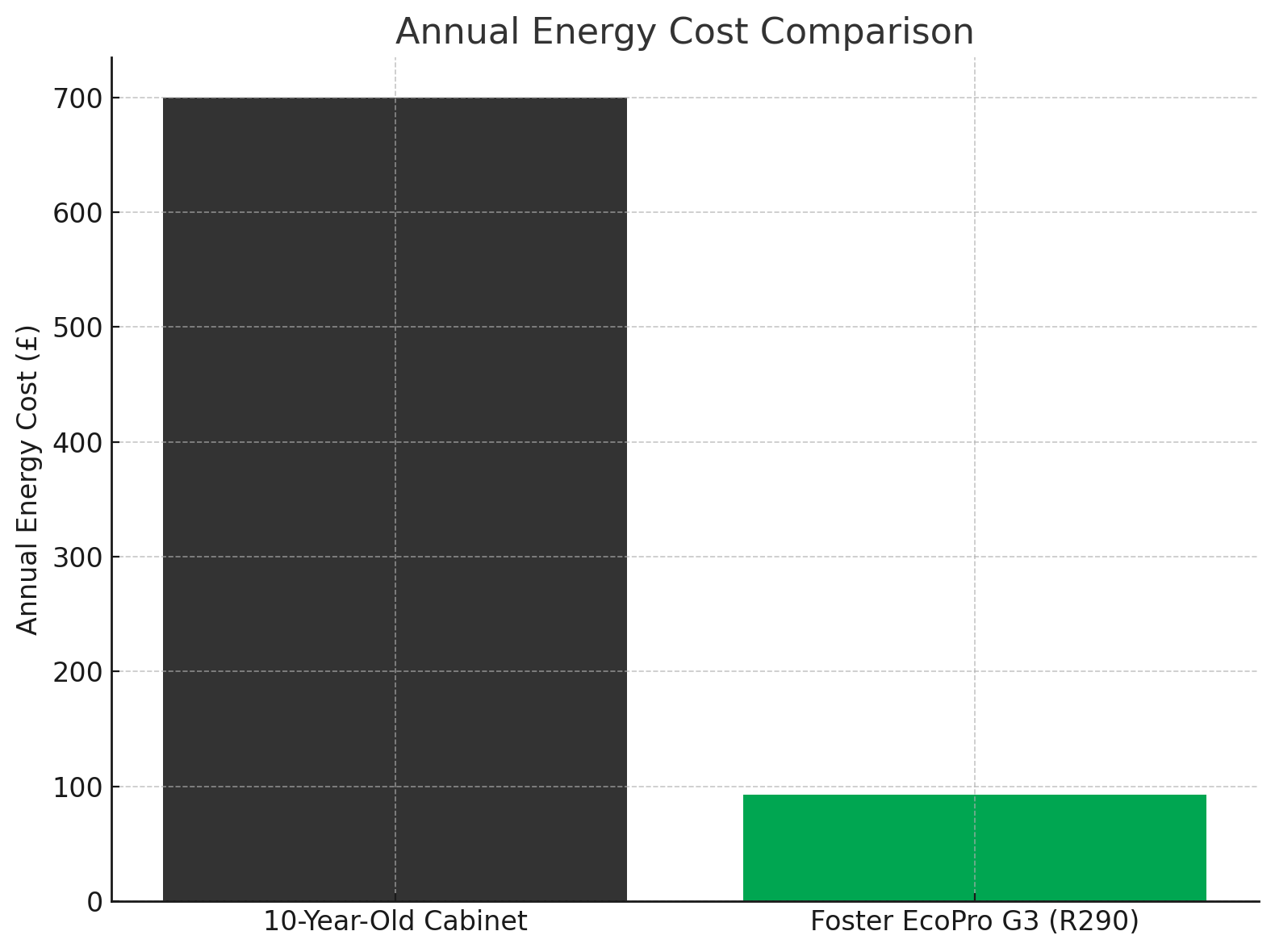 The Result: By swapping just one old unit for a new Foster G3, you could save over £500 per year in electricity alone. Over a 5-year warranty period, the energy savings could effectively pay for the fridge itself.
For high-use environments (hot kitchens, continuous door openings), the gap widens further.
The Result: By swapping just one old unit for a new Foster G3, you could save over £500 per year in electricity alone. Over a 5-year warranty period, the energy savings could effectively pay for the fridge itself.
For high-use environments (hot kitchens, continuous door openings), the gap widens further.
Old vs New: The Actual Energy Difference
Let’s look at the numbers. Technology has leapt forward in the last decade. Modern units utilise R290 refrigerant (which is thermodynamically more efficient), better insulation (Foster’s +stayclear condensers), and smarter airflow management. Here is a comparison between a standard 10-year-old commercial cabinet and a new Foster EcoPro G3. Using typical industry energy-consumption averages for older HFC cabinets vs modern R290 models, here is the comparison at an estimated electricity rate of 30p per kWh:How Much Can You Save by Upgrading to R290?
| Feature | 10-Year-Old- Cabinet | New Foster EcoPro G3 (R290) |
|---|---|---|
| Daily Energy Usage | 5.5 - 7.0 kWh | 0.85 kWh |
| Annual Energy Cost | £602 - £766 | £93 |
| 5-Year Run Cost | £3,000+ | £465 |
The Result: By swapping just one old unit for a new Foster G3, you could save over £500 per year in electricity alone. Over a 5-year warranty period, the energy savings could effectively pay for the fridge itself.
For high-use environments (hot kitchens, continuous door openings), the gap widens further.
Don’t Let the Energy Label Fool You
If you are shopping for a new fridge, you might see ratings like "B" or "C" and assume they aren't efficient. Remember: The energy rating scale changed recently. The bar was raised significantly. A modern "C" rated commercial fridge is vastly more efficient than an "A+" rated fridge from 2015. Don't compare new labels with old appliances, compare the kWh/annum figure. When choosing refrigeration equipment, always look at:- kWh per year
- Temperature stability
- Recovery time
- Duty rating for your environment
The Hidden Savings of R290
Beyond the electricity meter, switching to R290-ready equipment offers secondary savings:- Reduced Heat Output: Old fridges pump out a lot of heat. Your kitchen extraction and air conditioning have to work harder to remove that heat. R290 runs cooler, reducing the load on your HVAC system.
- Tax Efficiency: Under Full Expensing, many businesses can deduct 100% of qualifying equipment cost from taxable profits in year one. (Always check details with your accountant.)
- Resale Value: As F-Gas regulations tighten (see our Guide to F-Gas 2025), R290 units will hold their value, whereas HFC units will become liabilities.
Our Recommendation: The Foster EcoPro G3
If you are looking for the best balance of build quality and energy efficiency, the Foster EcoPro G3 range is the gold standard for UK kitchens. It features PureControl, a controller that adapts to how you use the fridge, and the +stayclear condenser, which reduces the need for maintenance and keeps energy consumption low over time. Shop the Foster EcoPro RangeFrequently Asked Questions
How long does a commercial fridge last?
Typically 8–12 years, but energy efficiency drops sharply after year 7 as components wear if not maintained properly.How much does a commercial fridge cost to run?
Old units often use 5–7 kWh per day. New R290 cabinets can use 1.2–1.5 kWh, depending on duty conditions.Is R290 safe in a kitchen?
Yes, units are factory-sealed and meet strict safety standards. Staff should follow normal siting and ventilation guidelines.Will a more expensive fridge really save money?
Yes. The EP 700 H’s energy savings can exceed £2,500 over five years, often offsetting the purchase cost.
January 12, 2026
|
View: 1007
|
Tags: Energy, Commercial, Efficient, Refrigeration, Foster, Refrigerator, Catering, Fridge, R290, Energy Efficiency